
July 30, 2026
Car Donation Tax Deduction Explained: What You Can Really Claim in 2026
Why Car Donation Tax Deductions Matter
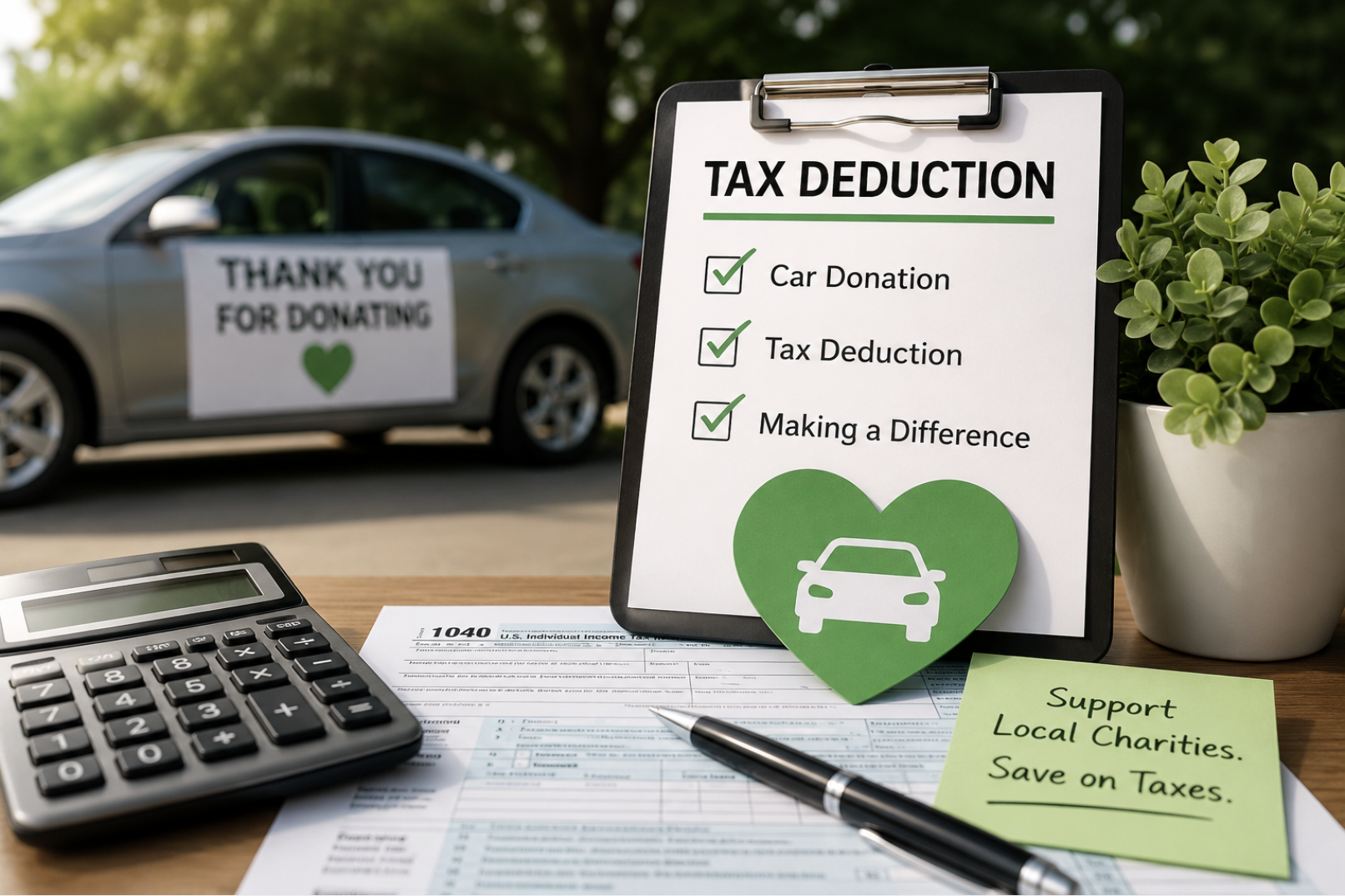
Tax deductions are one of the biggest reasons people choose to donate vehicles instead of selling them privately. For older cars that may require repairs or have low resale demand, the financial advantage of a tax deduction combined with the convenience of donation can make the process more appealing.
In addition to the financial benefits, donating a car also:
- Supports nonprofit organizations
- Eliminates the hassle of selling
- Removes towing and storage concerns
- Helps recycle or repurpose unwanted vehicles
For many donors, it becomes both a practical and charitable decision.
How the IRS Treats Car Donations
The IRS classifies vehicle donations as charitable contributions. That means your donation may qualify for a deduction if the receiving organization is a qualified nonprofit.
However, the deduction rules depend heavily on what happens to the vehicle after it is donated.
There are two primary scenarios:
Scenario 1: The Charity Sells the Vehicle
In most cases, donated vehicles are sold at auction. If this happens, your deduction is generally limited to the final sale price of the vehicle.
For example:
- Your car sells for $2,000
- Your allowable deduction is typically $2,000
The charity or donation processor will send documentation showing the final sales amount.
Scenario 2: The Charity Uses the Vehicle
Sometimes a nonprofit keeps and uses the vehicle directly for charitable operations instead of selling it.
Examples may include:
- Delivering food
- Transporting clients
- Providing community outreach services
In these cases, you may be able to deduct the vehicle’s fair market value instead of the sale price.
The $500 Rule Explained
One of the most important IRS thresholds involves the $500 rule.
If the Vehicle Sells for Less Than $500
You can generally claim:
- The fair market value up to $500, OR
- The actual sale price if lower
This is especially common with older vehicles, junk cars, or non-running vehicles.
If the Vehicle Sells for More Than $500
Your deduction is usually limited to:
- The exact sale amount
You must also receive written acknowledgment from the charity that includes:
- Vehicle identification number (VIN)
- Date of donation
- Sale amount
- Confirmation that no goods or services were exchanged
Do You Need to Itemize Deductions?
Yes. This is one of the most commonly overlooked parts of car donation tax deductions.
To claim a deduction for a donated vehicle, you must:
- Itemize deductions on your federal tax return
If you take the standard deduction instead, you generally cannot separately deduct your car donation.
Because tax situations vary widely, many donors speak with a tax professional to determine whether itemizing makes sense for their financial situation.
How to Determine Fair Market Value
Fair market value refers to what the vehicle would reasonably sell for in its current condition on the open market.
Several factors affect value:
- Mileage
- Mechanical condition
- Cosmetic condition
- Vehicle age
- Market demand
Many people use pricing guides such as:
- Kelley Blue Book
- Edmunds
- NADA Guides
However, it is important to remember that IRS rules may limit your deduction to the actual sale price rather than the estimated market value.
What Paperwork Do You Need?
Proper documentation is critical when claiming a vehicle donation deduction.
Donation Receipt
Immediately after donation, you should receive:
- A written acknowledgment or receipt
This proves the donation occurred.
IRS Form 1098-C
If the vehicle sells for more than $500, the organization should provide:
- IRS Form 1098-C or equivalent documentation
This form includes:
- Sale price
- Date of sale
- Vehicle information
Additional Records
It is also helpful to keep:
- Photos of the vehicle
- Copies of the title transfer
- Tow pickup records
- Any valuation estimates
Good recordkeeping helps protect you in case of questions during tax filing.
Common Mistakes People Make
Car donation tax deductions are valuable, but errors can create filing issues.
Overestimating Vehicle Value
One of the most common mistakes is assuming a car is worth more than its actual auction value.
The IRS pays close attention to inflated charitable deductions.
Losing Documentation
Without proper paperwork, deductions may be denied.
Always keep:
- Donation receipts
- Sale notices
- Tax forms
Assuming All Charities Qualify
Not every organization is eligible for tax-deductible donations.
Before donating, verify that the organization works with qualified nonprofits and provides compliant tax documentation.
Forgetting State Requirements
Some states require additional title or DMV steps after donating a vehicle.
Completing paperwork correctly helps protect donors from future liability.
Can You Deduct Repairs or Improvements?
Generally, repairs made before donation are not separately deductible.
However, improving a vehicle’s condition could potentially increase its sale value, which may indirectly affect the final deduction amount.
In many cases, donors find it more cost-effective to donate the car as-is rather than invest in expensive repairs.
Why Many People Donate Instead of Selling
Selling a used car privately often involves:
- Advertising
- Negotiations
- Meeting strangers
- Repair expenses
- Smog checks
- Registration issues
Donating eliminates much of that effort.
For non-running vehicles or older cars with declining market value, the combination of convenience and possible tax benefits often makes donation the more practical choice.
How Cars2Charities Simplifies the Tax Process
One reason vehicle donation programs remain popular is because organizations like Cars2Charities help simplify the process from beginning to end.
The process typically includes:
- Free vehicle pickup
- Title assistance
- Donation documentation
- Tax paperwork processing
- Coordination with nonprofit partners
This helps reduce confusion while ensuring donors receive the proper records needed for tax filing.
The Importance of Transparency in Vehicle Donations
Transparency is extremely important in charitable giving. Donors want to know:
- Where their vehicle goes
- How proceeds are used
- Whether the organization is legitimate
A trustworthy donation platform clearly explains:
- The donation process
- How vehicles are processed
- What documentation donors receive
This builds confidence and helps ensure the donor experience is smooth and compliant.
Final Thoughts
Understanding how car donation tax deductions work can help you make informed decisions before donating your vehicle. While tax benefits are not the only reason people donate cars, they can provide meaningful financial value when handled properly.
The key is understanding IRS rules, maintaining accurate documentation, and working with a reputable donation organization that explains the process clearly.
Whether your car is running, damaged, or no longer needed, donating it can support nonprofit programs while potentially reducing your taxable income at the same time.
For many donors in 2026, vehicle donation continues to offer a practical combination of convenience, community impact, and financial benefit.