
Blogs •
October 20, 2026
Can You Donate a Car That Doesn’t Run? Everything You Need to Know
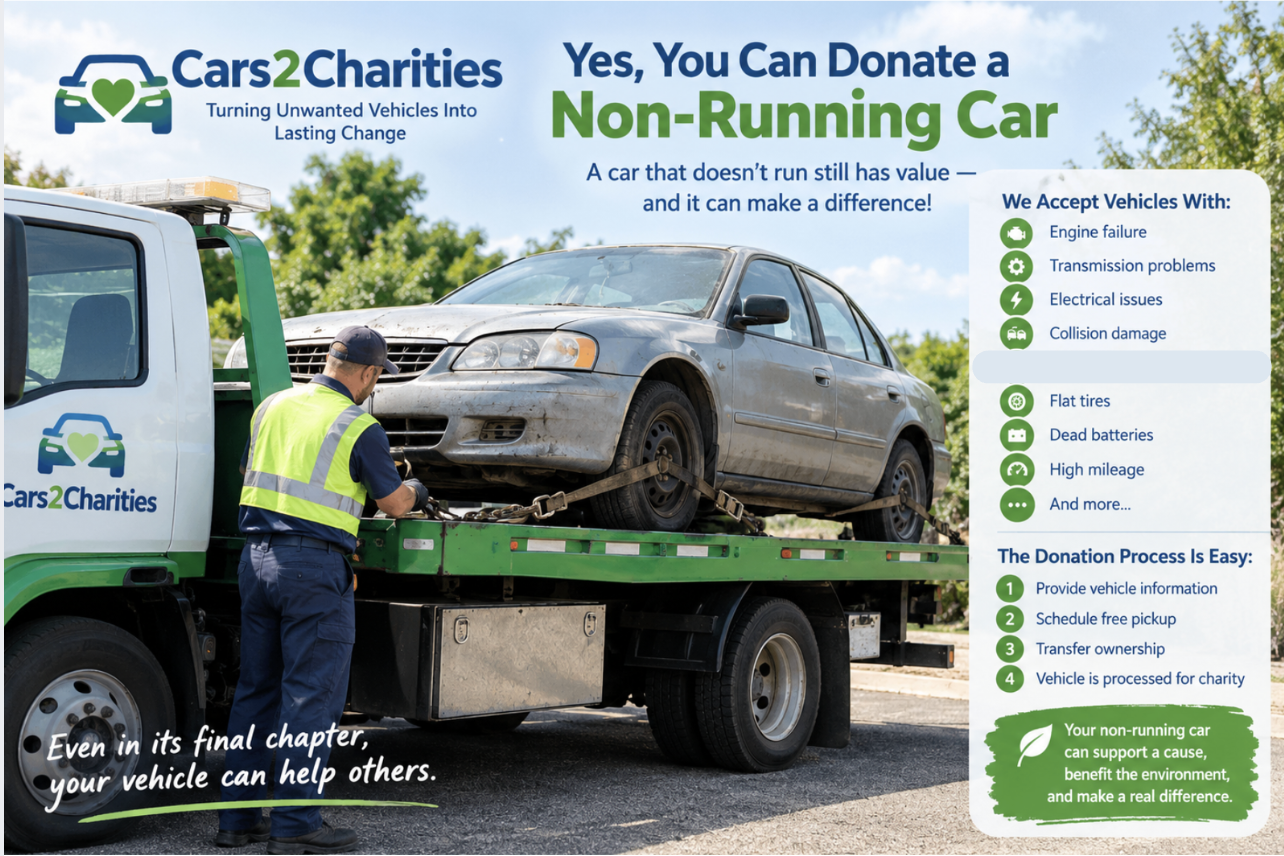
Yes, You Can Donate a Non-Running Car
A vehicle does not need to be operational to qualify for donation.
Cars2Charities will accept:
- Cars with engine failure
- Transmission problems
- Electrical issues
- Collision damage
- Flat tires
- Dead batteries
- High-mileage vehicles
Cars2Charities will even accept vehicles that have been sitting unused for years.
The reason is simple: even damaged or broken vehicles still contain value.
Why Charities Accept Non-Running Vehicles
Many people assume charities only want vehicles that can be resold easily, but that is not always the case.
Non-running cars can still generate funding through:
- Salvage value
- Recyclable materials
- Reusable auto parts
- Scrap metal sales
Even when a car cannot be driven, components such as:
- Catalytic converters
- Tires
- Batteries
- Aluminum parts
- Electronics
may still have market value.
These proceeds help support nonprofit organizations and community programs.
Common Reasons Cars Stop Running
There are many situations where vehicle owners decide repairs are no longer worth the cost.
Engine Failure
Replacing an engine can cost thousands of dollars, often exceeding the value of an older vehicle.
Transmission Problems
Transmission repairs are among the most expensive automotive fixes and frequently lead owners to replace the vehicle instead.
Failed Smog or Emissions Tests
In states with strict emissions standards, older vehicles may become too costly to bring into compliance.
Long-Term Storage
Vehicles left unused for extended periods may develop:
- Battery issues
- Tire damage
- Fuel system problems
- Rust and corrosion
In many cases, donation becomes the easiest solution.
How the Donation Process Works for Non-Running Cars
One reason people choose donation is because the process is usually very simple.
Step 1: Provide Vehicle Information
The donor shares:
- Vehicle make and model
- Condition details
- Location
- Title information
It is important to describe the condition honestly so transportation can be arranged properly.
Step 2: Schedule Free Pickup
Most donation programs provide free towing for non-running vehicles.
This is a major advantage because towing a broken car privately can be expensive.
The towing company usually coordinates:
- Pickup timing
- Vehicle access
- Transportation logistics
Step 3: Transfer Ownership
At pickup, the donor signs the title and completes required paperwork.
This legally transfers ownership and helps protect the donor from future liability.
Step 4: Vehicle Processing
Once transported, the vehicle is evaluated to determine whether it will:
- Be auctioned
- Be dismantled for parts
- Be recycled for scrap value
Even severely damaged vehicles can still generate proceeds for charity.
Do Non-Running Cars Still Qualify for Tax Deductions?
Yes, donated non-running vehicles may still qualify for charitable tax deductions under IRS guidelines.
The deduction amount depends largely on:
- Final sale value
- Salvage value
- How the vehicle is processed
In many cases:
- If the vehicle sells for more than $500, the deduction is generally based on the sale price
- If it sells for less, fair market value rules may apply up to certain limits
Tax rules can vary based on individual circumstances, so many donors consult tax professionals for guidance.
What Documents Do You Need?
The paperwork requirements for donating a non-running vehicle are usually minimal.
Typically, donors need:
- Vehicle title
- Valid identification
- Basic vehicle information
If the title is missing, some donation programs may still assist depending on state regulations.
Having the keys available can also simplify towing, although many programs can still pick up vehicles without them.
Why Donating a Broken Car Is Often Better Than Selling It
Selling a non-running vehicle privately can be difficult.
Potential buyers often expect:
- Extremely low prices
- Significant negotiations
- Repairs before purchase
Additionally, listing and advertising a broken vehicle may take considerable time with no guarantee of sale.
Donation eliminates many of these frustrations.
Avoiding Repair Costs
One of the biggest reasons people donate non-running cars is the cost of repairs.
Owners often realize:
- Repairs exceed vehicle value
- Additional issues may appear later
- Continued maintenance becomes financially impractical
Rather than investing more money into an aging car, donation provides a clean exit from ownership.
Environmental Benefits of Donating a Junk Car
Vehicle donation can also support environmentally responsible recycling.
Cars that cannot be repaired are often dismantled carefully so that:
- Usable parts are recovered
- Fluids are disposed of properly
- Metals are recycled
This helps reduce:
- Landfill waste
- Environmental contamination
- Demand for newly manufactured materials
Even heavily damaged vehicles can contribute reusable resources.
Common Myths About Donating Non-Running Cars
“My car is too damaged to donate”
Most programs accept vehicles in poor condition.
“I have to pay for towing”
Many organizations provide free pickup and towing.
“Only newer cars qualify”
Older and high-mileage vehicles are frequently accepted.
“The process is complicated”
Most donation programs are designed to be quick and simple.
Why More People Are Donating Junk Cars in 2026
Economic pressures and rising repair costs are causing more vehicle owners to rethink whether fixing older cars is worthwhile.
At the same time, consumers increasingly value:
- Convenience
- Time savings
- Simplified processes
Donation programs provide an easy alternative to:
- Repairing
- Advertising
- Negotiating
- Paying storage or towing fees
For many people, donating becomes the fastest and least stressful solution.
How Cars2Charities Helps With Non-Running Vehicle Donations
Cars2Charities helps simplify the donation process for vehicles in nearly any condition.
The program coordinates:
- Free towing
- Vehicle pickup scheduling
- Processing and documentation
- Distribution of proceeds to nonprofit organizations
This allows donors to remove unwanted vehicles quickly while helping support charitable causes.
Whether the car runs or not, the goal is to turn unused vehicles into meaningful community support.
Final Thoughts
If you have a vehicle that no longer runs, donating it may be far easier than trying to repair or sell it. Non-running cars still hold value through recycling, salvage, and parts recovery, which can help generate funding for nonprofit programs.
With free towing, simple paperwork, and potential tax benefits, donating a broken vehicle has become a practical option for many owners in 2026.
Instead of allowing an unused car to continue taking up space, donation provides an opportunity to support charitable organizations while simplifying the process of removing the vehicle from your property.