
Blogs •
November 24, 2026
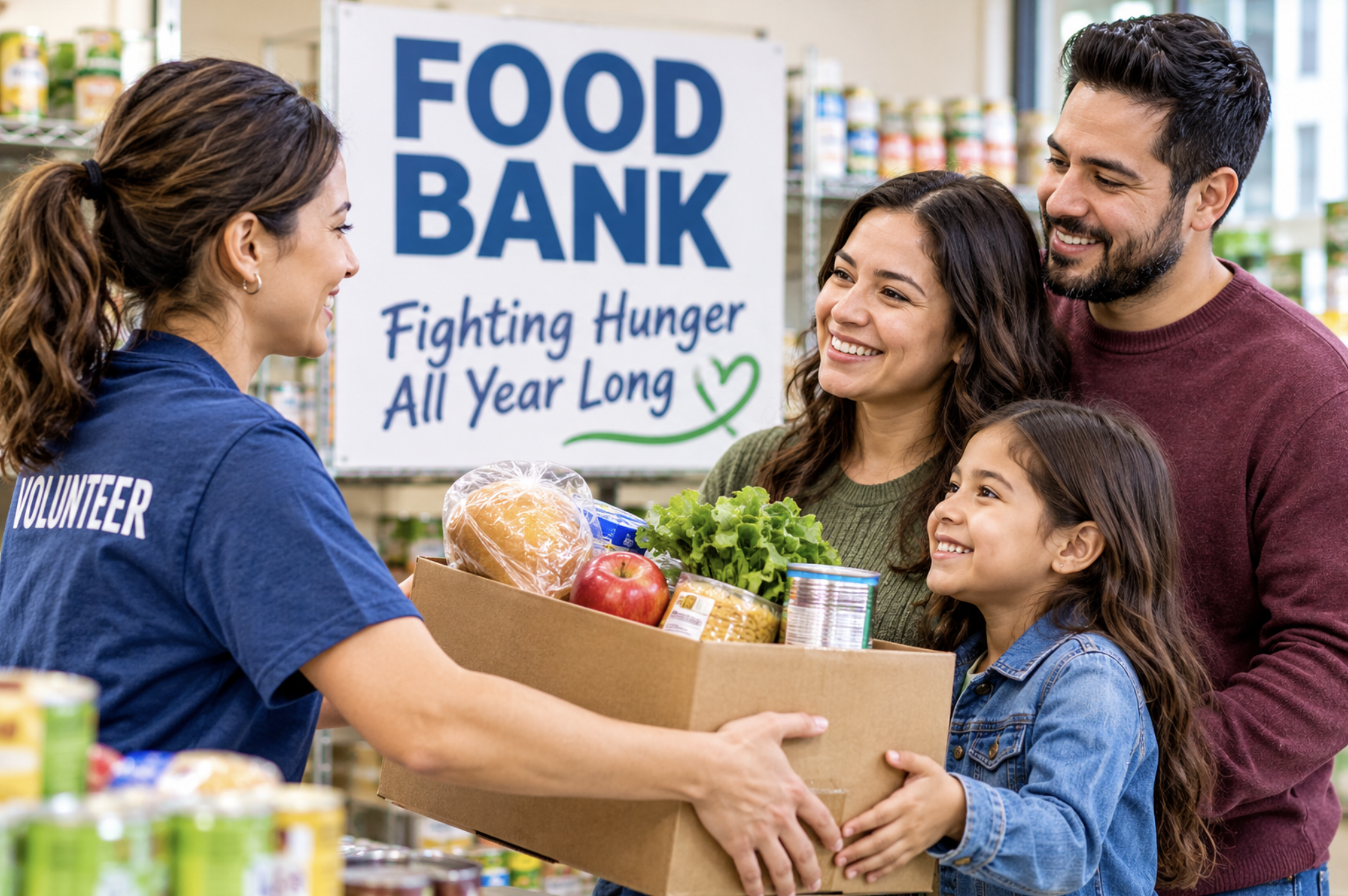
Food Banks: Helping Communities Fight Hunger All Year Long
Why Food Banks Are Needed All Year
Food insecurity affects people from all walks of life. A family experiencing an unexpected job loss, a senior living on a fixed income, or a single parent struggling with rising household expenses may suddenly find it difficult to afford groceries.
Even individuals who work full-time can experience food insecurity when housing costs, utilities, transportation, childcare, and other essential expenses consume most of their income.
Food banks help fill this gap by distributing groceries and essential food supplies to people who might otherwise go without meals. Their services are especially important during challenging economic periods when the cost of everyday necessities continues to rise.
Hunger is not seasonal. Families need breakfast, lunch, and dinner in January just as much as they do in November and December. This is why ongoing support for food banks is so important.
How Food Banks Support Local Communities
Food banks do much more than distribute canned goods. They serve as important community resources, connecting people with nutritious meals, emergency assistance, and other support services.
Helping Families Put Food on the Table
For families struggling financially, grocery expenses can become overwhelming. Food banks provide access to fresh produce, canned foods, grains, dairy products, and other everyday necessities. These resources help parents stretch their household budgets while ensuring their children have nutritious meals.
Supporting Children and Students
Children who experience food insecurity may struggle with concentration, energy levels, and academic performance. Many food banks partner with schools and community organizations to provide weekend meal bags, after-school snacks, and summer food programs.
These services help ensure children have access to meals even when school cafeterias are closed.
Assisting Seniors
Older adults living on fixed incomes often face difficult decisions between purchasing groceries, paying for medication, and covering housing expenses. Food banks and senior meal programs help reduce this burden by providing groceries, prepared meals, and nutrition assistance.
Helping Individuals Experiencing Homelessness
Food insecurity and homelessness are closely connected. Food banks frequently work alongside shelters, outreach organizations, and community nonprofits to provide meals to individuals and families experiencing housing instability.
Access to regular meals can provide an important foundation as people work toward greater stability.
Supporting Veterans and Individuals With Disabilities
Some veterans and individuals living with disabilities face financial challenges that make purchasing groceries difficult. Food assistance programs help these community members access essential nutrition while preserving more of their limited income for other necessities.
The Importance of Food Banks During Every Season
Although food banks often receive increased attention during the holidays, their work continues throughout the year. Each season brings different challenges and opportunities for community support.
Winter: Meeting Increased Household Needs
Winter can be particularly difficult for low-income households. Heating bills, holiday expenses, and weather-related challenges can make it harder to afford groceries. Food banks help families maintain access to meals during the colder months.
Spring: Supporting Families Through Changing Circumstances
Spring is an important time for food assistance programs. Families continue to need groceries, while schools and community organizations may coordinate food drives and outreach programs to replenish supplies after the holiday season.
Summer: Feeding Children When School Is Out
For many children, school provides more than an education. School breakfast and lunch programs may be an important source of daily nutrition. When summer vacation begins, some families face additional grocery expenses.
Food banks help address this need through summer meal programs, community distribution events, and partnerships with local organizations.
Fall: Preparing for the Holidays and Beyond
As families return to school routines and prepare for the colder months, food banks begin coordinating additional resources and donations. While holiday food drives are valuable, these organizations must also maintain enough supplies to support people well beyond the holiday season.
Why Consistent Food Donations Matter
Food banks depend on donations from individuals, businesses, grocery stores, farms, and charitable organizations. While large holiday food drives can provide an important boost, consistent donations help organizations plan for the months ahead.
Financial contributions are particularly valuable because they allow food banks to purchase the supplies they need most. Many organizations can use monetary donations to buy food in bulk, secure fresh produce, and distribute resources more efficiently.
Food donations also make a difference. Nonperishable items such as canned vegetables, beans, soups, pasta, rice, peanut butter, and shelf-stable milk are commonly requested. Many food banks also welcome fresh produce and other nutritious foods when they have the facilities to store and distribute them safely.
Volunteers are another essential part of the process. Sorting donations, packing grocery boxes, organizing distribution events, and delivering meals all require time and dedication from community members.
Every contribution helps strengthen the network of support that keeps food assistance programs operating.
How Community Support Helps Food Banks Reach More People
Food banks rarely work alone. They often partner with churches, schools, shelters, community centers, local businesses, and other nonprofit organizations to reach people who need assistance.
These partnerships allow food banks to extend their services beyond traditional distribution centers. Mobile food pantries, neighborhood grocery distributions, and meal delivery programs can help reach individuals who may have difficulty traveling to a food bank.
Community partnerships also help organizations identify unmet needs and direct resources where they can make the greatest difference.
When local residents, businesses, and charitable organizations work together, they create a stronger support system for everyone.
How Vehicle Donations Can Help Support Hunger Relief
There are many ways to support organizations working to fight hunger, and donating a vehicle is one charitable option that may help generate funding for nonprofit programs.
Through Cars2Charities, individuals can donate cars, trucks, SUVs, and other eligible vehicles while designating a participating nonprofit organization to benefit from the donation.
Rather than allowing an unwanted vehicle to sit unused, donors can turn it into an opportunity to support a cause they care about. Depending on the vehicle and its eventual sale, the donation can generate proceeds that help fund a nonprofit’s mission and ongoing programs.
For food banks and hunger-relief organizations, additional funding can help support essential operations, purchase food supplies, expand distribution efforts, and reach more individuals and families experiencing food insecurity.
Vehicle donations are especially meaningful because they offer another way for people to contribute beyond traditional cash or food donations. A vehicle that is no longer needed can become a resource that helps support important community services.
Through charitable vehicle donations, Cars2Charities helps connect donors with nonprofit organizations working to make a difference throughout the United States.
Making Hunger Relief a Year-Round Priority
Fighting hunger requires more than a few weeks of charitable giving each year. It requires consistent support, community involvement, and a shared commitment to helping people access the resources they need.
Food banks provide more than groceries. They offer relief during difficult times, help families maintain stability, support children’s development, and give individuals experiencing financial hardship an opportunity to move forward.
Whether someone contributes food, makes a financial donation, volunteers their time, or donates an unwanted vehicle, every act of generosity can help strengthen hunger-relief efforts.
The holidays are a wonderful reminder of the importance of giving, but compassion should not have a calendar. Food banks need community support in every season, and the people they serve depend on these organizations every day.
By supporting food banks and hunger-relief nonprofits throughout the year, communities can help ensure that fewer families have to face the challenge of an empty refrigerator or an uncertain next meal.