
Blogs •
November 12, 2026
November National Adoption Awareness Month: Celebrating Families and Supporting Children
What Is National Adoption Awareness Month?
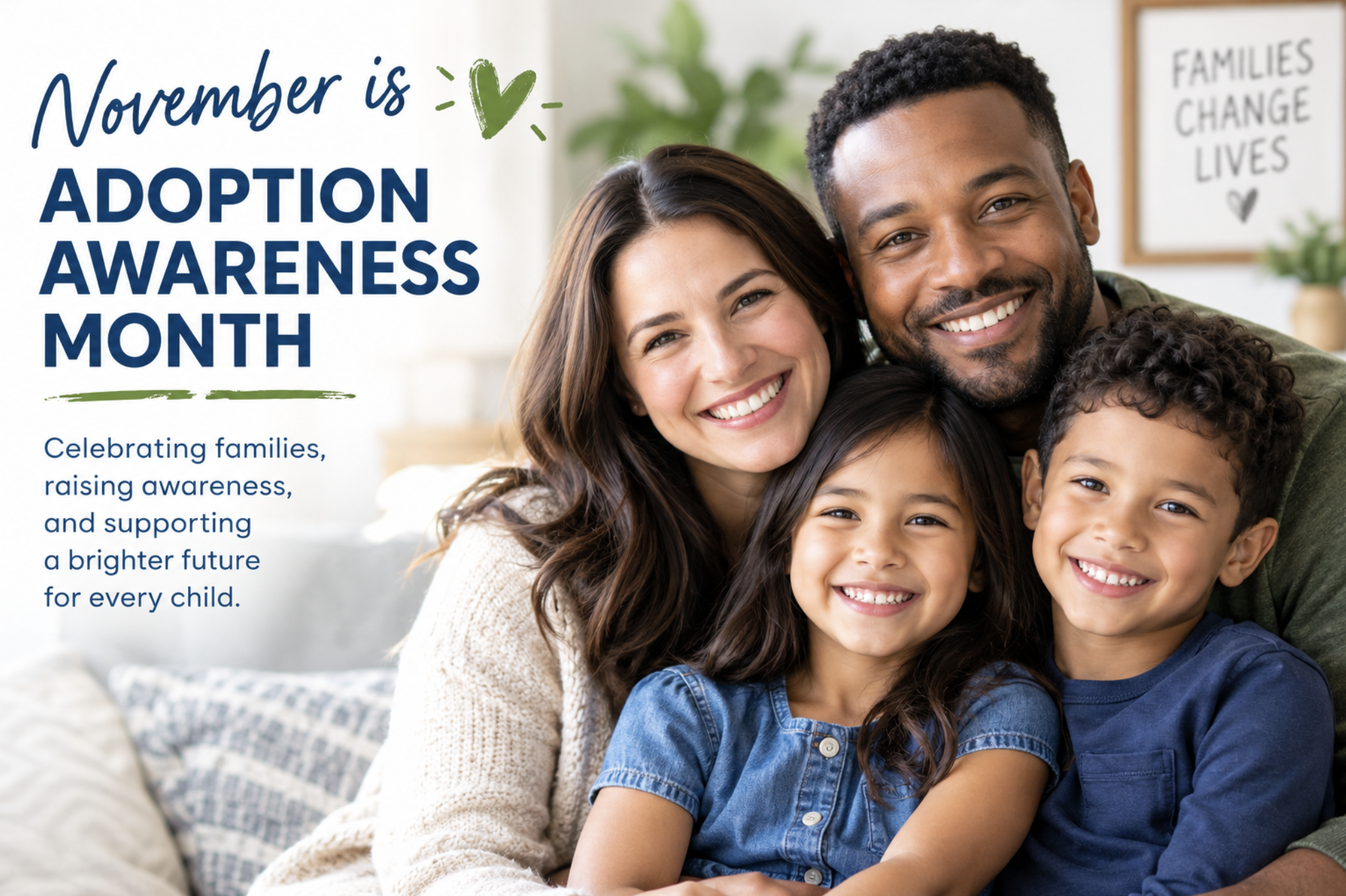
National Adoption Awareness Month is observed every November in the United States. Its purpose is to increase public understanding of adoption, celebrate families formed through adoption, and draw attention to children and teenagers in foster care who are waiting for permanent families.
The observance has historical roots in efforts to promote adoption and find homes for children in need. In 1976, Massachusetts Governor Michael Dukakis proclaimed the first Adoption Week. In 1984, President Ronald Reagan established the first National Adoption Week, and in 1995, President Bill Clinton expanded the observance to National Adoption Month.
Today, November provides an opportunity for adoption agencies, child welfare organizations, nonprofits, families, and community members to share information and encourage meaningful involvement.
Although adoption takes place throughout the year, National Adoption Awareness Month offers a dedicated time to recognize the importance of permanency, family connections, and support for children whose lives have been affected by separation, loss, or uncertainty.
Why Adoption Awareness Matters
Every child deserves to feel safe, valued, and supported. Children need caring adults who can help them navigate challenges, develop confidence, and build a foundation for the future.
For children in foster care, finding a permanent family can be an important step toward stability. Some children enter foster care because of abuse, neglect, family crises, or other circumstances that make it unsafe for them to remain at home. When reunification with their birth families is not possible, adoption may become one pathway toward permanency.
Adoption awareness helps communities better understand these circumstances and recognize that every child’s story is different. It also challenges common misconceptions about adoption and highlights the importance of supporting children before, during, and after the adoption process.
Awareness is particularly important for older children, teenagers, sibling groups, and children with special needs, who may face additional barriers to finding permanent homes. These children deserve the same opportunities to experience belonging, encouragement, and lasting family relationships.
By learning about adoption and supporting organizations that serve children and families, individuals can help create communities where more children have access to the resources and relationships they need.
Understanding the Different Types of Adoption
Adoption can take several forms, and each journey is unique. Understanding the different types of adoption can help people learn about the options available to families and the needs of children.
Foster care adoption occurs when a child in the foster care system becomes a permanent legal member of an adoptive family. Foster care adoption often focuses on children whose birth parents’ legal rights have been terminated or otherwise resolved in accordance with applicable law. Foster care itself is generally intended to provide temporary care while efforts are made toward reunification or another appropriate permanent plan.
Domestic infant adoption involves adopting a baby within the United States. Birth parents and adoptive parents may work with licensed agencies, attorneys, or other qualified professionals to navigate the process. Ethical adoption practices prioritize informed consent, appropriate counseling, and respect for the rights and well-being of everyone involved.
International adoption involves adopting a child from another country. This process can include immigration requirements, international laws, and the adoption regulations of both countries. Families must follow the applicable legal procedures and work with qualified professionals.
Stepparent and relative adoption allows a stepparent or another eligible relative to become a child’s legal parent. These adoptions can provide legal security and formalize an existing family relationship.
Regardless of the type of adoption, the child’s safety, best interests, identity, and long-term well-being should remain central to the process.
The Importance of Finding Permanent Families for Children in Foster Care
Children in foster care may experience uncertainty as they move between placements, maintain connections with family members, or adjust to unfamiliar environments. While foster families and child welfare professionals provide essential care, some children need a permanent legal family when returning to their birth parents is not possible.
Adoption can provide lasting legal relationships and a stable family environment. It can also give children opportunities to build meaningful connections, develop a sense of identity, and receive consistent support as they move through childhood and adolescence.
Older children and teenagers sometimes face additional challenges in finding adoptive families because prospective parents may initially focus on adopting infants or younger children. However, teenagers need encouragement, guidance, and dependable adults just as much as younger children do.
Sibling groups may also need families willing to keep brothers and sisters together whenever appropriate and in their best interests. Preserving sibling relationships can help children maintain important connections during a period of significant change.
National Adoption Awareness Month reminds communities that adoption is not simply about welcoming a child into a household. It is about providing the patience, understanding, resources, and commitment necessary to support a child over time.
How Adoptive Families Make a Difference
Adoptive parents make a meaningful commitment when they welcome a child into their family. Their role extends beyond providing food, shelter, and education. They also help children develop trust, navigate difficult emotions, and build healthy relationships.
Some adopted children may have experienced trauma, separation, or instability before joining their adoptive families. Others may have questions about their birth families, cultural backgrounds, or personal histories. Loving caregivers can help children explore these questions in age-appropriate ways while affirming that their experiences and feelings matter.
Adoptive families may benefit from trauma-informed counseling, adoption-competent therapists, support groups, educational resources, and connections with other adoptive parents. Access to these services can help families address challenges and strengthen their relationships.
Adoption is not a one-time event. It is a lifelong relationship that can evolve as children grow into adults and explore their identities. Continued communication, respect for a child’s history, and access to appropriate support can help families build strong and lasting bonds.
How to Support Adoption Awareness Month
People do not have to adopt a child to make a difference during National Adoption Awareness Month. There are many ways to support children, families, and organizations working in adoption and foster care.
Learn About Adoption and Foster Care
Taking time to understand the adoption process, the foster care system, and the experiences of children in care can help replace misconceptions with compassion. Reputable adoption agencies, child welfare organizations, and public child welfare departments can provide educational resources and information about local needs.
Support Adoption and Family Services Organizations
Nonprofit organizations often provide counseling, family education, foster parent training, mentoring, housing assistance, and other services for children and caregivers. Financial contributions, volunteer time, and community partnerships can help these organizations continue their work.
Some organizations focus on helping families navigate adoption, while others provide services to children and young adults who have experienced foster care. Supporting these programs can strengthen the network of care surrounding vulnerable children.
Consider Becoming a Foster Parent
For individuals and families who are interested and eligible, fostering can be one way to provide a safe and supportive temporary home for a child. Foster parents receive training and work with child welfare professionals to meet children’s needs. The primary goal is often reunification with birth parents when it is safe and appropriate, although other permanent plans may become necessary.
Anyone considering fostering should learn about local requirements, available training, and the emotional and practical responsibilities involved.
Volunteer in Your Community
Community members can help by volunteering with organizations that serve children, teens, and families. Depending on an organization’s needs and eligibility requirements, opportunities may include tutoring, mentoring, organizing donation drives, helping with events, or providing practical assistance to caregivers.
Even small contributions can help organizations reach more families and provide valuable resources.
Share Positive and Respectful Adoption Stories
Sharing adoption stories can help raise awareness and encourage thoughtful conversations. It is important, however, to respect the privacy of adopted children and their birth families. Personal histories should never be shared without appropriate consent, and adoption stories should recognize the experiences and emotions of everyone involved.
Awareness efforts are most effective when they celebrate families without suggesting that every adoption journey is simple or that adoption erases a child’s past.
How Charitable Giving Can Help Children and Families
Many nonprofits depend on donations to provide essential services for children, young adults, and families facing difficult circumstances. Charitable contributions can help fund counseling, educational programs, family support services, mentoring, emergency assistance, and other community resources.
For individuals who have an unwanted vehicle, car donation may be another way to support a nonprofit organization. Instead of managing the time and expense associated with selling an older or unused vehicle, donors may be able to donate a car and direct the proceeds to an eligible charitable organization.
Cars2Charities helps connect vehicle donors with participating nonprofit organizations. Through a vehicle donation, a car, truck, or other eligible vehicle may help generate funding for a chosen charitable cause. Depending on the vehicle and program requirements, donated vehicles may be sold, recycled, or otherwise processed to generate proceeds for charity.
Someone who wants to support children and families during National Adoption Awareness Month can explore participating organizations to determine whether an eligible adoption, foster care, or family-support nonprofit is available through the program.
Before donating, it is important to understand the program’s requirements, confirm the intended charitable recipient, and review the applicable tax documentation. Tax deductions are subject to eligibility rules and individual circumstances, so donors should consult IRS guidance or a qualified tax professional.
Adoption Awareness Is About More Than One Month
Although November provides a special opportunity to recognize adoption, the need for support continues throughout the year. Children and families benefit from communities that value stability, provide access to resources, and understand the importance of lifelong relationships.
Adoption awareness also means recognizing that every adoption story is different. Some families experience joy and connection alongside complex emotions. Some adopted individuals may want to learn more about their birth families, while others may have different needs or preferences. Respecting these individual experiences helps create a more supportive and compassionate adoption community.
For children who are waiting for permanent families, the work of adoption agencies, foster parents, social workers, advocates, and community organizations remains essential. For adoptive families, continued access to education and support can make a meaningful difference long after an adoption is finalized.
National Adoption Awareness Month is a reminder that children deserve safety, dignity, opportunity, and dependable relationships. By learning about adoption, supporting family services, volunteering, and contributing to organizations that help children thrive, communities can play a part in building a brighter future for children and families.
Every act of understanding and support can help strengthen the network of care that children need—not just in November, but every day of the year.